Faster time to market
Working LLM prototypes in 2 to 4 weeks and production deployments within a quarter, built on the same architecture as the final product so there is no rewrite from POC to scale.
Xpiderz is a senior LLM development company helping enterprises ship custom LLM development, domain fine-tuning, RAG architectures, and enterprise LLM deployment, engineered on your data, aligned to your governance posture, and tuned for accuracy, cost, and measurable business impact at scale.
Enterprises are betting on large language models to power copilots, automation, and customer experiences, yet most teams stall on the same questions. Closed APIs deliver speed but raise concerns around data residency, cost, and vendor lock-in, while open models like Llama, Mistral, and Mixtral offer control but demand serious engineering to reach production accuracy. Teams must choose between fine-tuning and RAG, manage latency and inference cost, satisfy regulators on auditability and bias, and integrate the model into messy enterprise stacks with SSO, role-based access, and observable evaluation. We close this gap through senior LLM development services built for custom LLM development, fine-tuning, RAG, and enterprise LLM integration, combining model selection, data engineering, prompt and retrieval design, evaluation harnesses, and secure deployment aligned with your governance and ROI targets.
As a senior LLM development company, we bring deep expertise across transformer architectures, fine-tuning, RAG, evaluation, and high-throughput inference to engineer production-grade LLM systems that meet your accuracy, cost, and compliance targets.
Domain-specific fine-tuning on Llama, Mistral, Mixtral, GPT, Claude, and custom transformer architectures, using LoRA, QLoRA, SFT, DPO, and RLHF to align the model to your terminology, tone, and tasks while keeping training cost and inference latency under control.
Prompt and Retrieval Engineering
Hybrid prompt and RAG architectures with chunking, embedding selection, reranking, and guardrails, tuned for accuracy, citation quality, and hallucination control on your data.
Evaluation and Observability
Automated evals, golden datasets, human review loops, and live telemetry that track accuracy, factuality, latency, and cost so quality is measurable rather than anecdotal.
Inference Optimization
Quantization with GPTQ and AWQ, speculative decoding, KV-cache reuse, vLLM, TensorRT-LLM, and batched serving that cut latency and inference cost by up to 80 percent.
Safety, Alignment, and Governance
Red-team testing, jailbreak defenses, PII redaction, policy filters, and auditable evals to ship LLMs that satisfy security, legal, and regulatory review.
Production-grade serving on Kubernetes, vLLM, Triton, or managed clouds with auto-scaling, model versioning, A/B testing, streaming responses, audit trails, and dashboards, deployed inside your VPC or on a managed runtime that fits your data residency requirements.
Our LLM development process moves your initiative from idea to production through four structured stages: discovery and data strategy, model selection and training, integration and deployment, and monitoring and optimization, engineered by senior LLM engineers for accurate, governed, and measurable language model outcomes.
Every engagement begins with a two-week discovery sprint where senior Xpiderz engineers and your stakeholders define target tasks, success metrics, and the data strategy that will power the model. We audit existing corpora, identify gaps, and translate ambition into a scoped LLM roadmap with fixed timelines, governance posture, and clear ROI targets.
Our engineers select the right base model, design the fine-tuning recipe, and build the retrieval pipelines that underpin enterprise-grade LLMs. We curate training data, run SFT, DPO, or RLHF on GPU clusters, and build evaluation harnesses tuned to your accuracy, cost, and latency targets before any traffic is served.
We integrate the LLM into your existing applications, data platforms, and identity systems with SSO, role-based access, audit trails, and zero-disruption rollouts. Every deployment is engineered for production scale with streaming responses, caching, fallback routing, quantization, and red-team testing before launch.
Enterprise LLMs require continuous monitoring to maintain accuracy, cost, and policy alignment. Xpiderz implements live evals, drift detection, and human review workflows that track factuality, latency, and spend. Optimization cycles retrain prompts, rerankers, and adapters as data and user behavior evolve.
Why enterprises invest in custom LLM development, and the measurable outcomes Xpiderz delivers across product, operations, and competitive positioning.
Working LLM prototypes in 2 to 4 weeks and production deployments within a quarter, built on the same architecture as the final product so there is no rewrite from POC to scale.
Quantization, routing, caching, smaller distilled models, and batched serving routinely cut inference spend by 60 to 80 percent versus naive frontier-API usage.
Fine-tuning and RAG aligned to your terminology, tone, and workflows consistently outperform generic models on internal benchmarks for accuracy, citation quality, and task completion.
Your proprietary data, prompts, evaluations, and fine-tuned weights become durable IP that compounds with usage, instead of disposable assets sitting on someone else's API.
Private deployments, customer-managed keys, PII redaction, audit trails, and EU AI Act, HIPAA, GDPR, GLBA, and SOC 2 readiness engineered into the stack from day one.
Architectures that swap between OpenAI, Anthropic, Google, Mistral, Meta Llama, and self-hosted open models, so you upgrade as the frontier moves without rebuilding your stack.
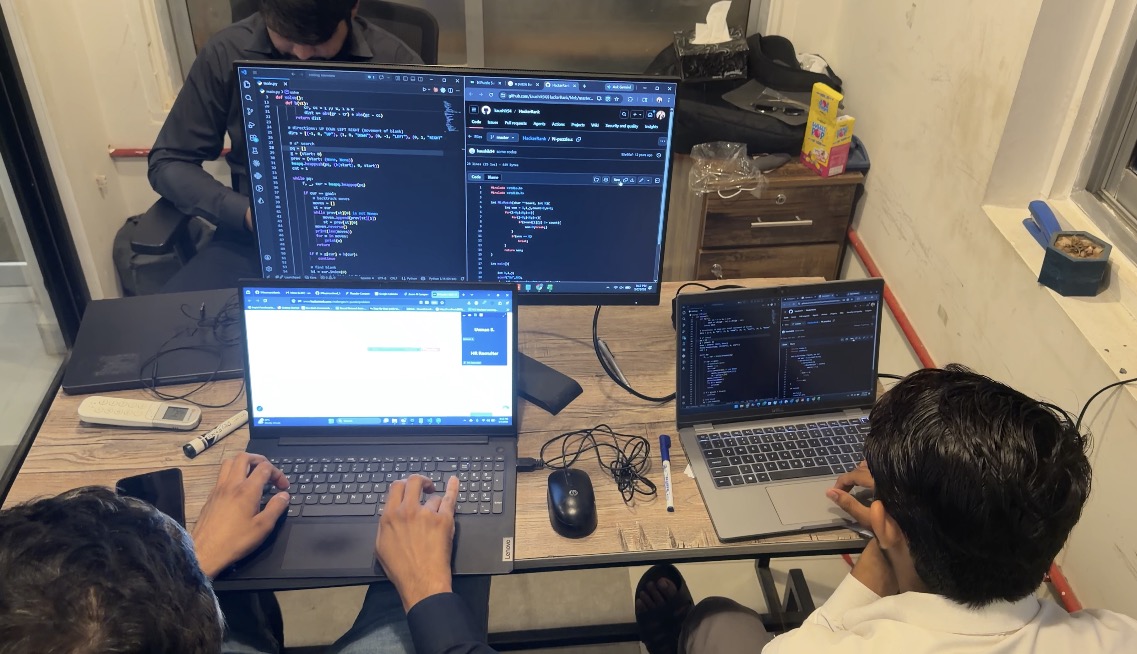
We build on the latest transformer research and ship custom LLM development with senior engineers who have fine-tuned, evaluated, and served production models at scale. Every architecture is tuned for your data, latency, and cost targets, not stitched together from blog posts.
We do not stop at proofs of concept. Xpiderz has shipped 50+ LLM products into live production across copilots, automation, RAG assistants, and internal tooling, with measurable accuracy, real users, and tracked ROI.
Security, governance, and compliance are baked in from day one. We design to HIPAA, GDPR, GLBA, SOC 2, and EU AI Act standards with private deployments, customer-managed keys, PII redaction, prompt-injection defenses, and audit trails.
Working LLM prototypes in 2 to 4 weeks, production deployments in a single quarter. Every prototype is built on the same fine-tuning and serving stack as the final product, so there is no rewrite from POC to scale.
No vendor lock-in. We architect on OpenAI, Anthropic, Google Gemini, Mistral, Meta Llama, Cohere, or open-source models on your own infrastructure, and we route the right model to the right task as better options ship.
Domain-tuned LLMs that draft credit memos, summarize regulatory filings, automate KYC review, and power analyst copilots, deployed inside the bank perimeter with full audit trails.
LLM-powered product copy generation, search reranking, personalized recommendations, and merchandiser copilots that lift conversion and shrink content production cycles.
HIPAA-aligned medical LLMs for clinical note summarization, prior-authorization drafting, patient triage, and literature review, fine-tuned on de-identified records and SNOMED ontologies.
LLMs that parse shipping documents, draft customs paperwork, summarize exception emails, and power planner copilots, reducing manual handling and accelerating disruption response.
Underwriting and claims LLMs that extract data from PDFs, draft adjuster narratives, summarize policies, and surface coverage decisions, all auditable and explainable for regulators.
LLMs that generate itineraries, draft destination content, summarize disruption notices, and power agent copilots for booking, rebooking, and loyalty management.
Service and engineering LLMs that diagnose fault codes, summarize technical bulletins, draft repair narratives, and power in-vehicle and dealer-facing assistants tuned to OEM data.
Guest-experience LLMs that personalize stay recommendations, draft on-property messaging, summarize reviews, and power concierge copilots across brand and franchise systems.
Listing LLMs that draft property descriptions, summarize leases, parse appraisal reports, and power broker copilots that qualify buyers and accelerate transaction cycles.
Engineering LLMs that surface SOPs, summarize maintenance logs, draft work orders, and power technician copilots that troubleshoot equipment from plant data and CAD specs.
Editorial LLMs that draft long-form content, generate metadata, summarize transcripts, and power newsroom copilots that respect editorial voice, attribution, and rights.
Legal LLMs that draft contracts, surface relevant clauses, summarize depositions, and power attorney copilots tuned to firm-specific templates and case law citations.
Let's scope your LLM project and identify the fastest path from prototype to production deployment, with senior engineers on day one.
Schedule a CallMulti-tenant AI voice-calling platform automating seller prospecting for Australian real-estate agencies.
AI-powered marketing analytics platform that reduced reporting time by 90% and doubled client capacity.
Full-spectrum market intelligence platform monitoring competitive signals across six data dimensions.
AI-powered personal research assistant for Master's and PhD students.
Conversational AI solution automating customer engagement through WhatsApp in the UAE market.
AI-powered legal consultation platform democratizing access to affordable legal guidance.
The world's first AI platform for legislative drafting and policy research.
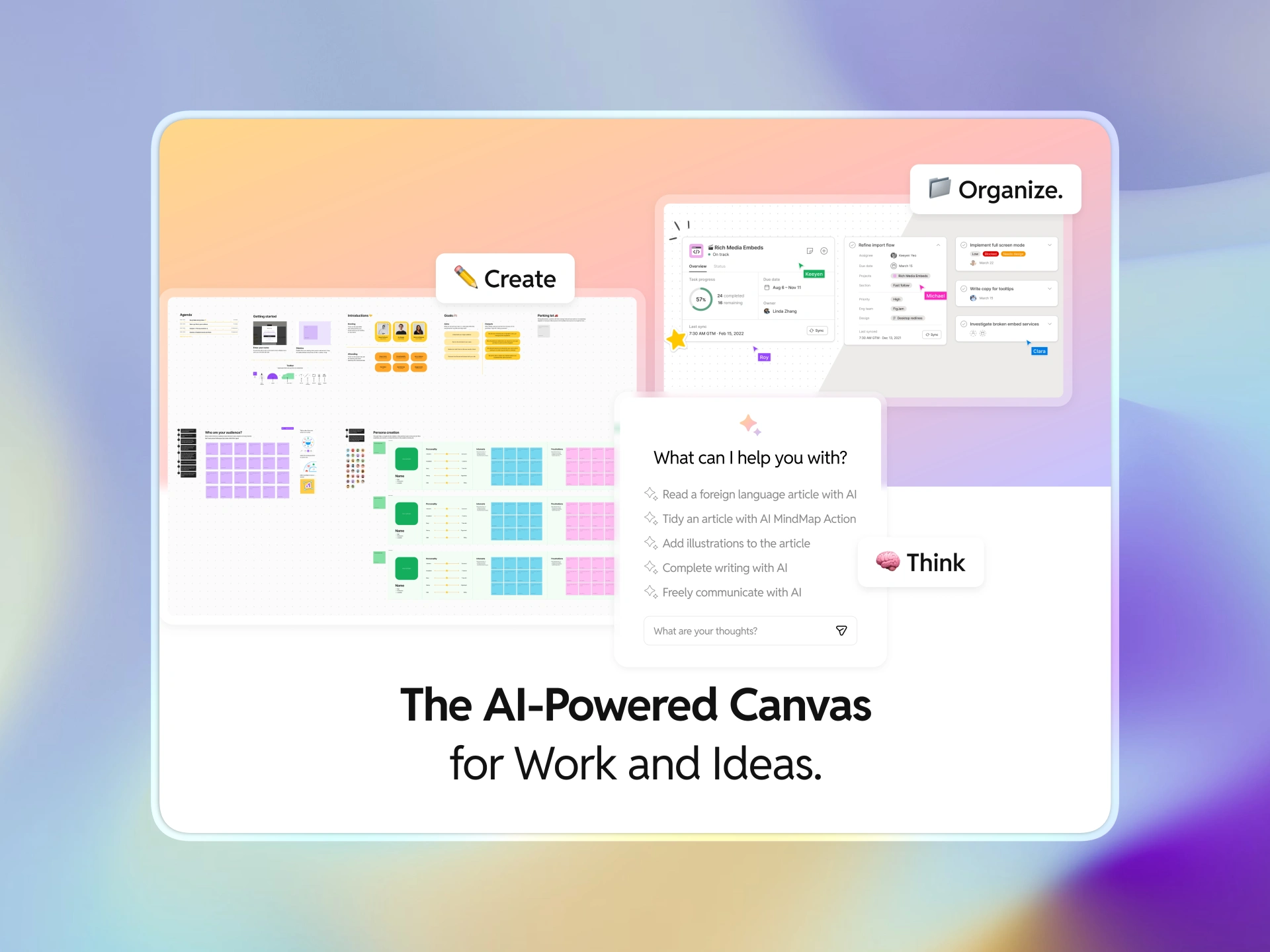
Product marketing deck for YaseenAI's Hive — the AI-powered canvas for work and ideas.
Clear answers on scope, cost, compliance, and how production-grade LLM development services actually work.
LLM development is the engineering discipline of selecting, fine-tuning, retrieving, evaluating, and serving large language models for specific business tasks. It matters because raw API calls rarely meet enterprise accuracy, cost, and compliance bars, while a properly engineered LLM stack turns generic foundation models into a durable, measurable, and defensible capability.
It depends on the task. RAG fits when answers must be grounded in changing or private documents, when traceability and citations matter, and when knowledge updates frequently. Fine-tuning fits when you need consistent tone, structured output, domain reasoning, or lower inference cost on repetitive tasks. Most enterprise stacks combine both, with retrieval grounding a fine-tuned base model.
Yes, we integrate LLMs into Salesforce, HubSpot, ServiceNow, Snowflake, Databricks, SharePoint, Confluence, custom data lakes, and bespoke applications via APIs, webhooks, and middleware. SSO, role-based access, audit trails, and data residency controls are preserved from day one.
It varies with scope. Pilots typically start at $30K and full enterprise LLM platforms scale to $250K+, driven by data engineering effort, fine-tuning complexity, inference volume, integration breadth, and compliance requirements. We quote fixed fees against a written scope after a discovery call.
Working prototypes ship in 3 to 5 weeks. Full production LLM deployments typically reach launch within a single quarter, with weekly demos against working software and a real go-live date committed during scoping.
Yes, we design to HIPAA, GDPR, GLBA, SOC 2, and EU AI Act standards with private deployments, customer-managed keys, PII redaction, prompt-injection defenses, jailbreak testing, audit trails, and data-residency controls baked in from day one.
Every LLM is instrumented from day one with KPIs like task accuracy, cost-per-call, latency, deflection or automation rate, handle-time reduction, and revenue lift, so ROI is observable in dashboards rather than anecdotal. We agree on success metrics during scoping and report against them weekly.
Yes, you own everything we build, including fine-tuned model weights, adapters, prompts, evaluation suites, retrieval pipelines, and infrastructure code. No vendor lock-in and no per-seat licensing on the work we deliver.
OpenAI GPT, Anthropic Claude, Google Gemini, Mistral, Meta Llama, Cohere, and open-source models running on your infrastructure, with deployments on AWS Bedrock, Azure OpenAI, Vertex AI, or self-hosted clusters using vLLM, Triton, and TensorRT-LLM.
Book a free discovery call to align on goals, receive a fixed-fee proposal within 48 hours, and a senior engineering pod kicks off within one to two weeks. No account-manager handoffs, no offshore subcontracting, and no months-long sales cycles.